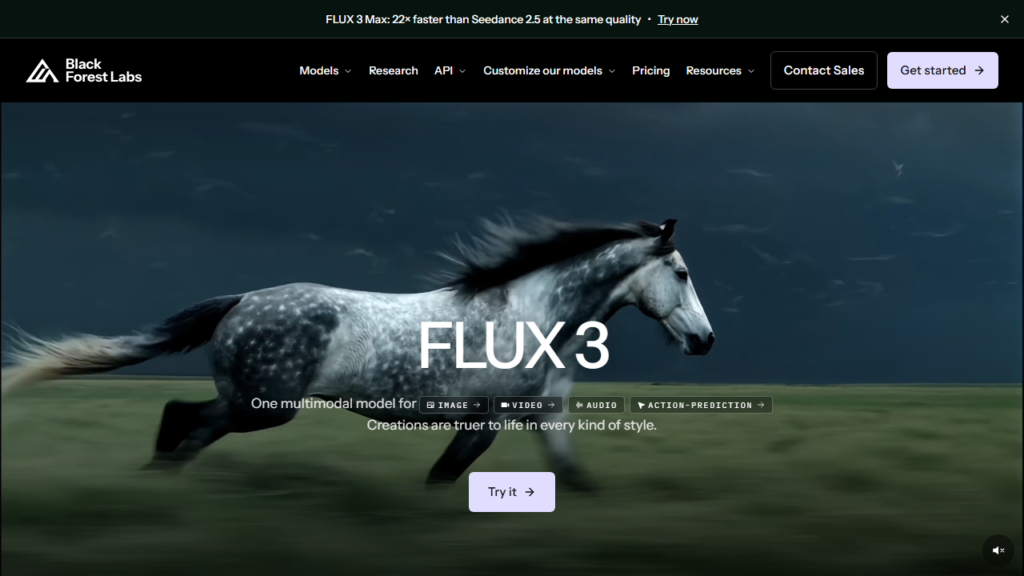
Flux.1 AI by Black Forest Labs is widely recognized by AI researchers, digital artists, and commercial studios as the most capable, versatile, and anatomically precise open-weights text-to-image foundation model in existence, establishing a new global standard for prompt adherence and in-image typography. Founded by the core engineering pioneers who originally created Stable Diffusion and Latent Diffusion at Runway and Stability AI, Black Forest Labs launched the Flux.1 model family to disrupt the closed-source proprietary dominance of platforms like Midjourney and DALL-E 3. By providing open model weights alongside commercial enterprise APIs, Flux.1 democratizes state-of-the-art visual generation for developers and creators worldwide.
As detailed in our comprehensive Flux.1 directory listing, this 12-billion parameter rectified flow transformer architecture dramatically outstrips legacy generative models. While earlier text-to-image generators notoriously struggled to spell words, render realistic human hands, or follow intricate spatial relationships, Flux.1 solves these persistent limitations. In this definitive guide, we explore the origins of Black Forest Labs, break down the three distinct Flux variants (Schnell, Dev, and Pro), examine hardware requirements for running the model locally in ComfyUI, provide an expert prompting masterclass, and evaluate its commercial and ethical implications.
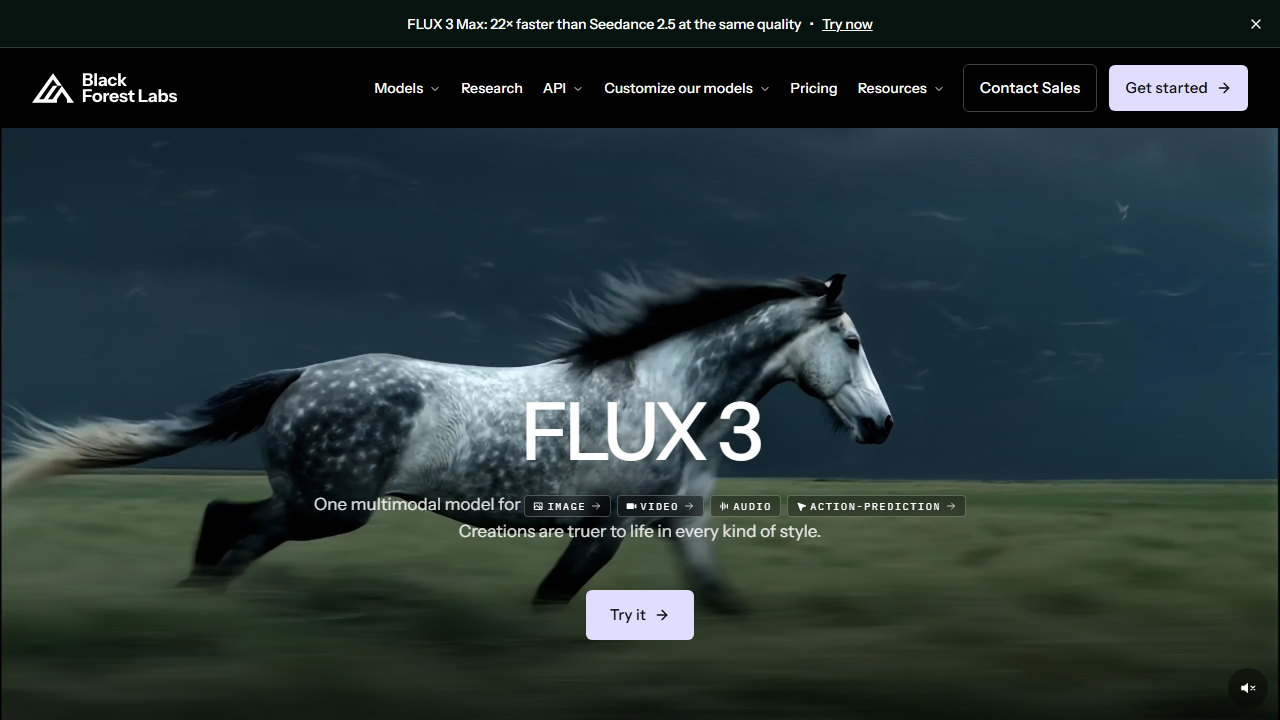
Origins: The Engineers Behind the Black Forest Labs Revolution
To understand why Flux.1 AI caused an immediate seismic shift across the generative visual landscape, one must examine its engineering pedigree. Black Forest Labs was founded in Germany by Robin Rombach, Patrick Esser, Andreas Blattmann, and a team of visionary researchers who spearheaded the foundational academic papers behind Stable Diffusion (CompVis / LMU Munich) and Stability AI’s SDXL.
Frustrated by corporate pivot decisions and the technical limitations of traditional U-Net diffusion architectures, the team departed to form an independent research laboratory. Backed by major technology venture funding, Black Forest Labs set out to build an architecture capable of processing multimodal representations at unprecedented scale. The result is the Flux model family: a 12-billion-parameter hybrid model combining multimodal transformer blocks, rotary positional embeddings, and rectified flow matching algorithms.
Decoding the Three Variants: Schnell, Dev, and Pro
Rather than releasing a one-size-fits-all model, Black Forest Labs structured Flux.1 into three specialized versions calibrated for distinct computational budgets and licensing requirements:
1. Flux.1 [schnell] (Fast / Open-Source Commercial)
Flux.1 [schnell] (German for “fast”) is a guidance-distilled model optimized to generate stunning high-resolution images in just 1 to 4 sampling steps. Most importantly for developers, Black Forest Labs released [schnell] under the highly permissive Apache 2.0 license. This means individual creators, indie software developers, and commercial enterprises can run [schnell] locally, modify the weights, integrate it into commercial SaaS applications, and deploy it freely without paying licensing royalties. It is ideal for local gaming rigs and budget-conscious API developers.
2. Flux.1 [dev] (Non-Commercial Research & Fine-Tuning)
Flux.1 [dev] is an 8-to-28 step guidance-distilled model designed for research, visual experimentation, and community LoRA (Low-Rank Adaptation) fine-tuning. While [dev] offers slightly richer shadow depth, more subtle skin subsurface scattering, and superior prompt fidelity compared to [schnell], it is released under a non-commercial research license. Developers building proprietary models or training specialized character LoRAs often use [dev] as their primary base foundation before acquiring commercial licenses.
3. Flux.1 [pro] (Flagship Hosted Cloud API)
Flux.1 [pro] is the crown jewel of the model family—a closed, maximum-capacity foundation model available exclusively through hosted API infrastructure partners (such as Fal.ai, Replicate, Together AI, and Mystic). [pro] represents the absolute peak of prompt adherence, typography rendering, and visual aesthetics, outperforming top-tier closed models like Midjourney v6 and DALL-E 3 on standardized visual preference benchmarks. It is designed for advertising agencies, gaming studios, and enterprise publishing houses requiring uncompromising image quality at scale.
Core Architectural Breakthroughs Over Legacy Image Generators
What makes Flux.1 so radically superior to legacy diffusion systems like Stable Diffusion 1.5, SDXL, or older versions of Midjourney? Below are the three primary technical advancements:
1. Flawless In-Image Typography and Spelling
Historically, asking an image generator to include written text resulted in garbled, alien-looking glyphs. Flux.1 integrates sophisticated text encoders (T5-XXL) that comprehend lexical spelling with surgical precision. Whether you prompt for a street sign reading “AI PRO TIPS,” a neon storefront banner reading “Cyber Cafe 2026,” or an intricate magazine cover with headline text, Flux renders crisp, legible, and properly kerned typography simply by placing the desired words inside quotation marks in your prompt.
2. Anatomical Perfection: Hands, Skin Pores, and Facial Micro-Details
The infamous “six-fingered AI hand” problem has been essentially eliminated in Flux.1. The 12-billion parameter model exhibits a nuanced spatial understanding of human skeletal and muscular anatomy. Fingers, wrists, knuckle creases, and interlocking hands are rendered with natural perspective and correct digit counts. Furthermore, Flux avoids the plastic, over-smoothed artificial skin texture characteristic of older models, rendering authentic skin pores, fine peach fuzz, subtle blemishes, and realistic subsurface optical scattering.
3. Complex Spatial Composition and Multi-Subject Prompt Adherence
Legacy models frequently suffered from “attribute leakage”—if you prompted for a red bicycle next to a blue car, the bicycle would often turn blue or the car would turn red. Thanks to its rectified flow transformer backbone, Flux.1 isolates distinct objects in space. It understands relational prepositions such as “to the left of,” “beneath,” “behind,” and “held in the right hand,” enabling complex multi-subject scene choreography that previously required extensive manual inpainting.
Running Flux.1 Locally: Hardware Requirements and Setup
Because Flux.1 is an expansive 12-billion parameter model, running it entirely on local hardware requires significant GPU memory (VRAM). Below is a practical guide to system requirements across different precision formats:
| Precision / Quantization | Minimum GPU VRAM | Recommended System RAM | Inference Speed (RTX 4090) | Recommended Interface |
|---|---|---|---|---|
| Full FP16 / BF16 | 24 GB VRAM | 32 GB – 64 GB | 15 – 20 seconds / image | ComfyUI or SwarmUI |
| NF4 / Q8 Quantization | 16 GB VRAM | 32 GB | 20 – 30 seconds / image | ComfyUI (bitsandbytes) |
| GGUF Q4_K_S (Compressed) | 10 GB – 12 GB VRAM | 16 GB – 32 GB | 35 – 50 seconds / image | ComfyUI with GGUF nodes |
| Cloud API (Fal / Replicate) | 0 GB (Cloud Compute) | Any Browser | 2 – 5 seconds / image | Web dashboard or REST API |
Prompting Masterclass: Moving Away from Tag Soup
One of the most common mistakes creators make when transitioning from older Stable Diffusion models to Flux.1 is relying on outdated “tag soup” prompts (e.g., “masterpiece, highly detailed, 8k wallpaper, trending on artstation, octane render”). Flux was trained on rich, descriptive natural language captions. To achieve breathtaking results, adopt conversational, descriptive prose:
- Describe the Scene Like a Cinematographer: Write in full sentences detailing the subject, camera angle, lens optics, and environment. (e.g., “A medium close-up portrait of an elderly watchmaker working in a sunlit Swiss workshop, shot on 50mm f/1.4 lens with shallow depth of field.”).
- Quote Explicit Text for Typography: Enclose exact words inside single or double quotes. (e.g., “He holds an antique gold pocket watch engraved with the words ‘Tempus Fugit’ on the inner dial.”).
- Describe Atmosphere and Color Palettes: Specify authentic environmental cues. (e.g., “Soft golden morning light streams through dust-mottled windowpanes, casting long shadows across aged mahogany workbenches covered in brass gears.”).
Benchmark Matrix: Flux.1 vs. Midjourney v6 vs. DALL-E 3
How does Flux.1 compare against the most prominent commercial image generation engines? Below is an objective benchmark matrix:
| Evaluation Dimension | Flux.1 [pro / dev] | Midjourney v6 | DALL-E 3 (OpenAI) | Ideogram v2 |
|---|---|---|---|---|
| Open Weights Availability | Yes (Apache 2.0 / Research) | No (Closed Discord / Web) | No (Closed API / ChatGPT) | No (Closed Web App) |
| In-Image Text Spelling | Industry-leading accuracy | Moderate (Short words only) | Good (Occasional typos) | Exceptional graphic design |
| Anatomical Realism (Hands) | Near-flawless digit counts | High (occasional extra fingers) | Moderate (frequent smoothing) | Good realism |
| Local Offline Execution | Fully supported via ComfyUI | Not possible | Not possible | Not possible |
| Community Fine-Tuning (LoRAs) | Extensive global ecosystem | None (Locked ecosystem) | None | Style presets only |
Fine-Tuning Ecosystem: Custom LoRAs and ControlNets
Perhaps the most profound competitive advantage of Flux.1 over closed proprietary systems like Midjourney is the open community ecosystem. Within weeks of release, open-source researchers trained thousands of specialized Low-Rank Adaptations (LoRAs) on platforms like Civitai and Hugging Face. Developers can fine-tune Flux on custom brand identity assets, specific video game art styles, architectural blueprints, or consistent character likenesses using just 20 to 50 reference photographs.
Furthermore, integration with ControlNet, IP-Adapter, and regional prompting nodes in ComfyUI allows visual directors to lock character poses, trace exact line art contours, and composite multi-layered visual effects with pixel-level precision that closed platforms simply cannot replicate.
Frequently Asked Questions About Flux.1 AI
Is Flux.1 AI free to use?
Yes. The Flux.1 [schnell] model variant is completely free, open-source, and licensed under Apache 2.0 for both commercial and personal use.
Can I run Flux on my laptop?
If your laptop features a modern NVIDIA GPU with at least 10GB to 12GB of VRAM (such as an RTX 3080 or RTX 4070 mobile), you can run quantized GGUF versions locally. Alternatively, you can use cloud API endpoints on Fal.ai or Replicate for a few cents per image.
Who created Flux.1?
Flux.1 was developed by Black Forest Labs, an AI research company founded by the original German engineering team that created Stable Diffusion and SDXL.
Does Flux require negative prompts?
Unlike older Stable Diffusion models, Flux.1 is trained with rectified flow guidance distillation and generally does not require negative prompts to achieve crisp, defect-free images.
Can Flux render text on posters and signs?
Yes. Flux.1 is widely recognized as the industry benchmark for typography, rendering clear, correctly spelled text when words are enclosed in quotation marks within your prompt.
What is the difference between Schnell and Dev?
[schnell] is a fast 4-step model licensed under Apache 2.0 for commercial use. [dev] is a more detailed 20-step model intended for non-commercial research and custom LoRA training.
Where can I try Flux online without installation?
You can test Flux online via hosted playgrounds such as Fal.ai, Replicate, Together AI, Poe, and Hugging Face Spaces.
The Future of Open Visual AI
In summary, Flux.1 AI represents a watershed triumph for the open-source artificial intelligence movement. By shattering the illusion that closed proprietary platforms hold an unassailable monopoly on visual photorealism, Black Forest Labs has provided creators, independent developers, and enterprise studios with an extraordinary visual engine that excels in human anatomy, prompt adherence, and graphic typography. For anyone serious about digital art, design automation, or generative visual research, Flux.1 is the definitive text-to-image foundation model to embrace in 2026.